| Upfront cost | Higher than electric storage. Unit cost plus positioning and condensate drainage. | Highest of the five in most cases. Collectors, tank, pump, controller and roof work. | Lowest to buy and install, which is why it is common as an emergency like-for-like swap. | Mid range for the unit. Cost moves a lot with whether gas is already connected. | Mid range. Wall-mounted unit, but may need gas or electrical capacity upgrades. |
|---|
| Ongoing energy | Uses substantially less electricity than conventional electric storage. The actual figure depends on model, climate, installation and use. | Depends heavily on how much work the booster does, which depends on roof orientation, tilt and shading. | Generally the most expensive to run of the electric options. Controlled-load tariffs change the picture. | Depends on fuel. Mains natural gas and bottled LPG behave very differently on cost. | Depends on usage. No standby loss from a stored tank, but heats on demand at full rate. |
|---|
| Household size | Tank sizing as for storage. Recovery rate matters for larger households. | Tank sizing as for storage, plus enough collector area for the demand. | Sized by tank capacity and recovery. Undersizing shows up as running out. | Storage sized by tank; continuous flow sized by flow rate instead. | Sized by flow rate, not capacity. The question is how many outlets run at once. |
|---|
| Space required | Outdoor unit plus tank, with real clearance for airflow. Often the deciding factor. | Roof area for collectors plus a tank, either on the roof or at ground level. | Tank only. Can go indoors in a cupboard or outdoors against a wall. | Tank for storage, or a compact wall unit for continuous flow. | Smallest footprint. Wall-mounted unit, no tank. |
|---|
| Noise | Has a fan and a compressor. Position away from bedrooms and boundaries. | Generally quiet. Any noise is usually the circulation pump. | Effectively silent in normal operation. | Burner noise while heating, usually modest. | Burner and fan noise while running, only while hot water is being drawn. |
|---|
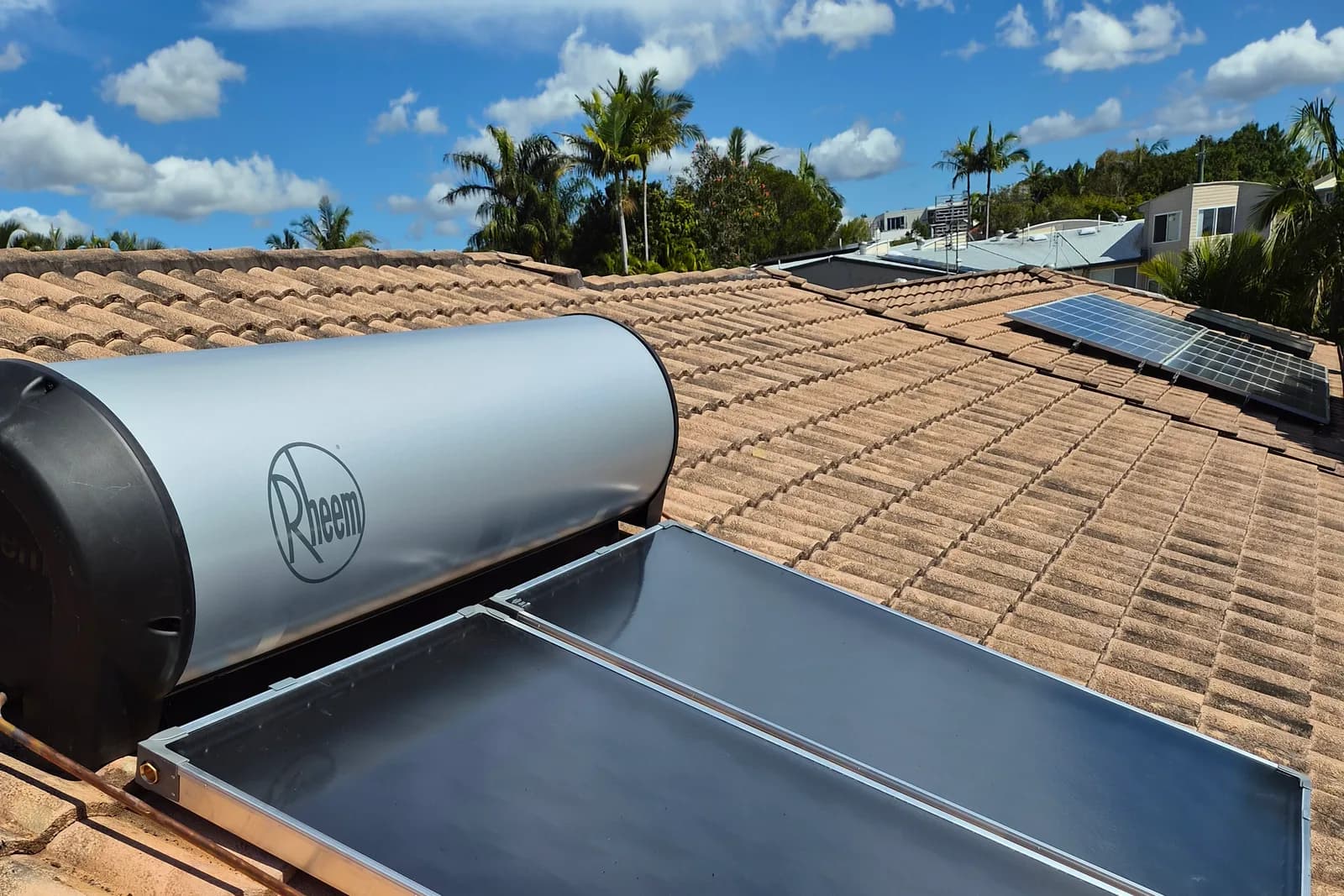
| Roof suitability | Not required. The unit sits at ground level. | Critical. Orientation, tilt, shading and roof condition all matter. | Not required. | Not required. | Not required. |
|---|
| Works with solar power | Strong pairing. Many models can be scheduled to heat while solar PV is generating. | A separate technology entirely. Solar thermal heats water directly rather than making electricity. | Can be scheduled to daytime, though it uses far more electricity to do the same job. | Limited relevance, since it burns gas rather than using electricity. | Depends which fuel the unit uses. |
|---|
| Existing connection needed | Electrical supply, and somewhere for condensate to drain. | Electrical or gas supply for the booster. | Electrical supply. Often already there in a like-for-like swap. | Gas supply with adequate capacity, mains or bottled. | Gas or electrical supply, with enough capacity for the unit's peak draw. |
|---|
| Incentives | Eligible air-source models can create STCs. Model eligibility must be checked against the current register. | Eligible solar water heater models can create STCs, on the same conditions. | Does not attract the same STC treatment. | Not applicable. | Depends on the technology in the specific unit. |
|---|
| Main limitation | Position and noise. If there is nowhere sensible to put it, it is the wrong choice. | Roof and shading. A poor roof means the booster carries the load and the economics change. | Running cost, and it will run out if undersized. | Fuel availability and emissions. Gas burns fuel and gas storage loses heat from the tank. | Flow capacity. Too many outlets at once and the temperature drops. |
|---|