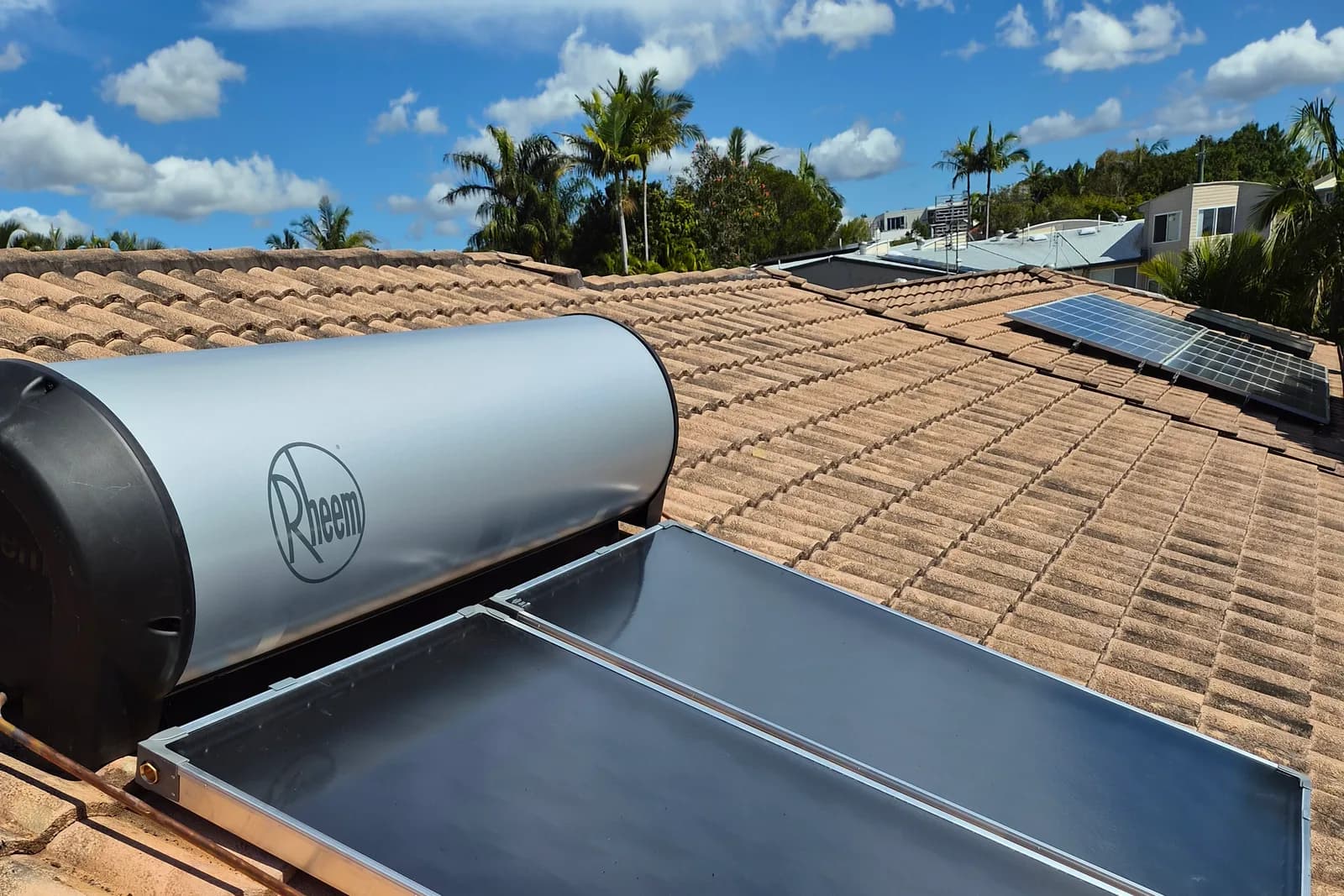
Most of what gets advertised as a hot water rebate in Australia is the federal Small-scale Renewable Energy Scheme, working through Small-scale Technology Certificates. It is worth understanding the difference, because it changes what appears on your quote and who does the paperwork. It applies the same way on the Sunshine Coast as anywhere else in Australia, though the zone a property sits in does affect how many certificates a system creates.
This page carries no dollar figures. Certificate values move with a market price and with the zone a property sits in, and a number written into a web page is out of date quickly. Everything numeric on this subject belongs with the regulator, which is linked below. Last updated 2026-08-28.
What a certificate actually is
When an eligible solar water heater or air-source heat pump is installed, it can create a number of Small-scale Technology Certificates. Those certificates are tradeable, and in practice most customers never touch them: the supplier takes assignment and passes the value through as a discount on the installed price.
The number of certificates depends on the specific model and on the zone the property is in, because both affect how much conventional energy the system is deemed to displace over its life.
Why model eligibility decides it
This is the part most often glossed over. Eligibility is not a property of the category, it is a property of the individual model. Two heat pumps that look similar can differ, and a model can come off the register.
So the practical test is simple: get the exact model number onto the quote, and check it against the current official register rather than against a brochure or a salesperson's summary. If a quote will not name the model precisely, that is worth asking about.
The timing requirement
Certificates have to be created within an applicable administrative period after installation, currently twelve months under the Clean Energy Regulator's requirements.
For most customers this is invisible because the supplier handles it as part of the job. It matters when nobody has been made responsible for the paperwork, which is a good reason to confirm who is doing it before the work happens rather than afterwards.
Why the value moves, and why nobody can quote it as a fixed figure
Two separate things decide what a certificate benefit is worth, and both of them move.
The first is how many certificates a system creates. That is set by the model and by the zone the property sits in, because the scheme deems how much conventional energy the system will displace over its remaining life. It also shrinks as the scheme runs down: the number of years a system is deemed to displace energy for reduces over time, so the same model installed in two different years creates a different number of certificates.
The second is what each certificate is worth. They are traded, and the price is set by a market rather than by a government schedule. It moves. Anyone quoting you a precise dollar rebate that will still be accurate in three months is guessing at the second half of that.
This is why the useful question is not "what is the rebate" but "what is the installed price after whatever has been assigned". That number is one you can actually compare between quotes, and it does not depend on either variable holding still.
Assigned or claimed, and why the difference matters
There are two ways the benefit reaches you and they feel very different at the till.
In an assignment, you sign the certificates over to the installer and they discount the installed price by an agreed amount up front. You pay less on the day, you do no paperwork, and the installer carries the risk of what the certificates actually sell for. This is what happens on most jobs.
The alternative is that you keep the certificates and create them yourself, which means registering, meeting the administrative requirements and selling them. You pay the full price on the day and recover the value later. Occasionally that nets more; usually it is not worth the effort for a single system.
The failure mode is a quote that is ambiguous about which it is. A price described as "after rebate" that turns out to have assumed you would claim it yourself is a real amount of money to discover late. Ask the question in those words: has the certificate benefit already been taken off this price, or am I claiming it separately?
What eligibility does not cover
It is worth being clear about the boundaries, because the word rebate does a lot of work in advertising.
The scheme is for eligible solar water heaters and air-source heat pumps. A gas system, a continuous flow unit or a conventional electric tank does not create certificates under it, whatever else may be true about them. If a quote for one of those mentions a rebate, that is either a state program, a manufacturer promotion or a misunderstanding, and it is worth finding out which.
Certificates also attach to the system, not to the installation around it. Switchboard work, a new circuit, pipework, a tempering valve or a position change are yours regardless. A larger discount on the unit does not reduce the cost of getting it fitted properly.
And eligibility is checked against the register as it stands when the system is installed, not when the brochure was printed. Models come off. That is why the model number on the quote matters more than the brand on the front of it.
State and manufacturer programs
Separate from the federal scheme, there are sometimes state government programs and manufacturer promotions. These come and go, have their own eligibility rules, and frequently have application deadlines and funding caps.
We have not listed any here, deliberately. A page listing a program that has closed is worse than a page listing none, because it sets an expectation about the price. Ask us what is current when you get a quote, and check the relevant government site yourself.
What to do with all this
Three things. Get the exact model number on the quote. Ask whether the certificate benefit has been assigned and already discounted, or whether it is yours to claim. And check the model against the register yourself, because it takes a minute and it is the one part nobody else can do for you.
If you want help working out whether a particular system is eligible, call 0415 611 356.
Frequently asked questions
Is an STC the same as a rebate?
Not quite, though people use the words interchangeably. A Small-scale Technology Certificate is a tradeable certificate created under a federal scheme when an eligible system is installed. It usually reaches you as a discount because the supplier takes assignment of the certificates. A rebate in the ordinary sense is a payment back to you, and state or manufacturer rebates work differently again.
Which hot water systems can create certificates?
Eligible solar water heaters and eligible air-source heat pumps. Not electric storage, and not gas. Eligibility is specific to the model rather than the category, so a heat pump is not automatically eligible just by being a heat pump. The model has to appear on the current official register, which is why the exact model number on your quote matters.
How much is a certificate worth?
We do not publish a figure, because it moves. The number of certificates a system creates depends on the model and on the zone the property is in, and the value of each certificate moves with a market price. Anyone quoting you a fixed benefit should be able to show you how they got there. The regulator is the place to check the current position.
Is there a deadline?
Yes. Certificates must be created within an applicable administrative period after installation, currently twelve months, and the Clean Energy Regulator sets and publishes that requirement. In practice this matters most when someone installs a system themselves or through a supplier who does not handle the paperwork, and then tries to claim later.
Will my quote show the certificate benefit?
It should be explicit either way. Either the benefit has been assigned to the supplier and already deducted from the price shown, or it has not and you are claiming separately. Two quotes that look different can be identical once you know which approach each has taken, so it is worth asking directly rather than assuming.
RCM works across Sunshine Coast and the hinterland. See the full Sunshine Coast service area for where we work regularly and where we travel on different terms.