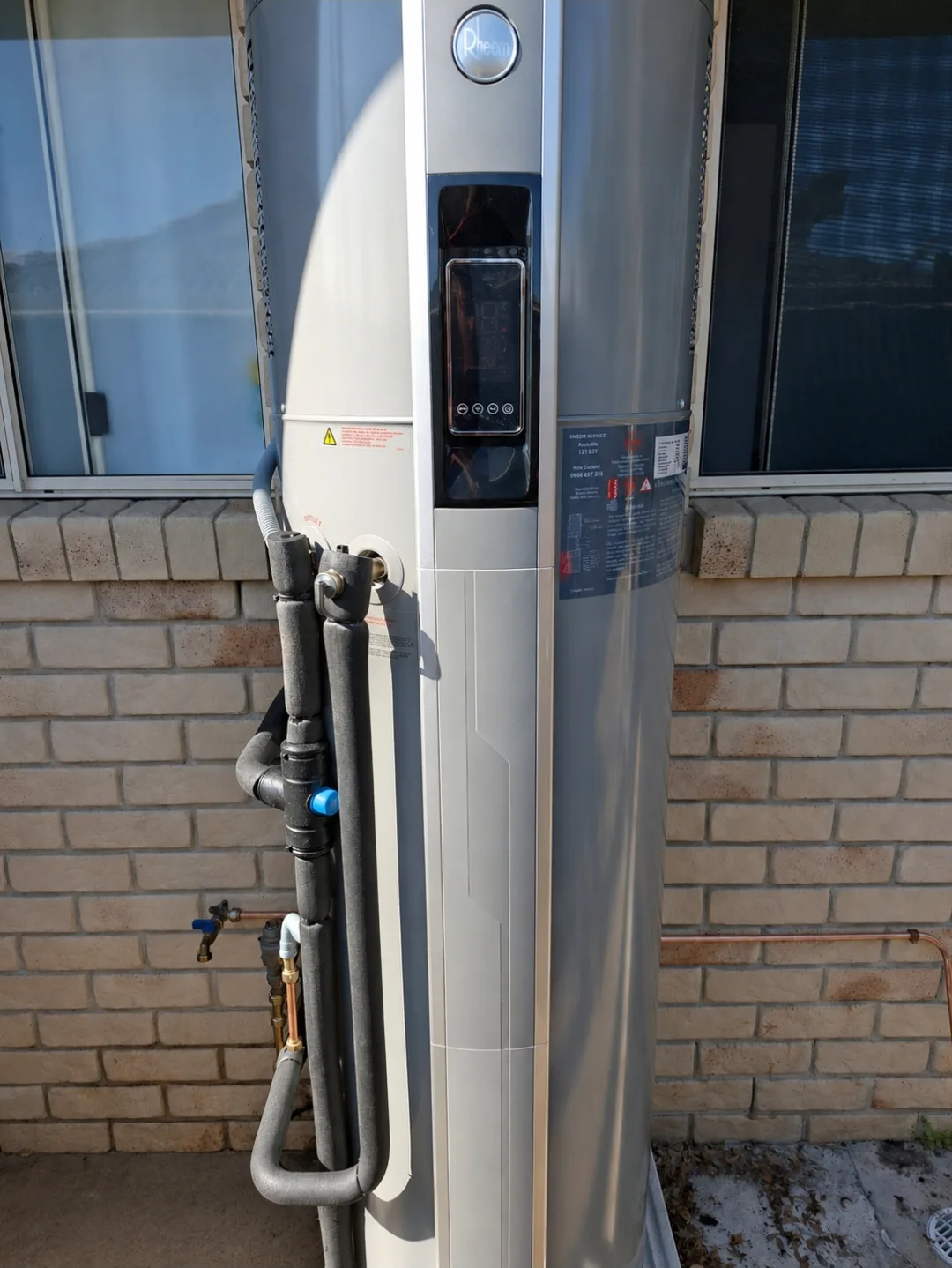
Hot water systems are among the least-serviced appliances in a house, largely because they sit outside and work quietly until they do not.
Coastal air is hard on roof-mounted and outdoor components, which is worth bearing in mind on a Sunshine Coast property. Beyond that, whether yours warrants regular attention depends on what it is. A young electric tank has few moving parts. A solar system has a pump, a controller, a booster and components on the roof. A heat pump has a fan, a compressor and filters. The answer genuinely differs, and anyone quoting you a single universal interval is not describing your system.
Why we will not publish a service interval
Manufacturers set their own maintenance requirements, and they vary by system type and by model. Some warranties are conditional on those requirements being met and documented.
So a web page stating that every hot water system needs servicing every twelve months is telling some readers to spend money they do not need to and telling others something that will not satisfy their warranty. Your documentation is the authority, and if you cannot find it we can usually work it out from the model number.
Electric storage: what gets checked
The relief valve, which is the part most likely to fail quietly and the one that wastes the most water when it does.
The sacrificial anode, if it is accessible and the tank's age warrants it. This is the check most often skipped and the one most likely to extend the tank's life.
Element and thermostat performance, since a failing element on a twin-element tank halves your hot water long before it fails outright.
Tank and connection condition, looking for early corrosion at the fittings and any staining that suggests the cylinder is starting to go.
Gas: what gets checked
Burner and ignition condition, since dust and debris around a burner are a common cause of a system that lights unreliably.
Ventilation and combustion clearances, which get compromised over time by fences, plants and storage appearing around what was once open space.
The controller and, on storage systems, the same valve and tank checks as an electric tank.
On continuous flow, whether the unit is still delivering its rated flow at temperature, which is what you notice when it stops.
Solar: what gets checked
Collectors, for damage, and their mountings and flashings, since these live on a roof in a coastal climate.
The circulation pump and the controller, which are the two components most likely to fail and the two that stop the system contributing without stopping the hot water, because the booster quietly takes over.
The booster itself, since a solar system whose booster is doing all the work is an expensive electric system with panels on the roof.
Pipework and insulation, because heat lost between the collectors and the tank is heat the sun provided for nothing.
Heat pump: what gets checked
Airflow and clearances, because the unit draws heat from the air around it and anything restricting that directly reduces what it delivers. Fences, decking and vegetation all creep in over a few years.
Fan and compressor operation, and any filters the manufacturer specifies.
Condensate drainage, which is a genuine nuisance when it blocks.
Controller settings, particularly if the system is meant to be heating during the day to use solar power and has quietly reverted.
Owner-occupied and managed properties
For a home you live in, servicing is generally about catching the cheap fixes before they become expensive ones and keeping a warranty intact.
For a managed property, documentation matters as much as the work, because someone other than the person on site has to see what was done and sign off the spend. A service record with photographs is what an owner is actually approving.
For a rental where the tenant reports the fault and the owner pays for it, the useful thing is a clear account of what was found, what was done and what is likely to need attention next. That is what stops the same conversation happening twice.
Cannot fault the service Richard provided, even when we threw him a few curve balls. Communication was excellent. Highly recommend RCM Hot Water Services.
These are reproduced from RCM’s Google reviews with the names as published. This is a selection rather than the full set. Read them all on Google
There is no single answer, which is why we do not publish one. Manufacturers set their own requirements and they differ by system type and model, and some warranties depend on those being met. Solar and heat pump systems have more moving parts than an electric tank and generally warrant more attention. Check your documentation, or ask us.
Does servicing affect my warranty?
It can. Some manufacturers make warranty cover conditional on documented maintenance, particularly on solar and heat pump systems. If your system is still within its product warranty, it is worth reading what the booklet requires before deciding to skip a service, because the cost of the service is usually small next to the cover.
What is a sacrificial anode?
A consumable rod inside a storage tank that corrodes so the tank does not. It is the single most overlooked part of a hot water system. Replaced at the right point it can extend a tank's life considerably; left indefinitely it is used up, and after that the cylinder starts corroding instead. Very few tanks ever have it changed.
My system seems fine. Is a service worth it?
It depends on the type and the age. On a young electric tank, probably not often. On a solar system with a pump, a controller and roof-mounted components, or a heat pump with a fan and filters, checks catch things while they are still cheap. The relief valve on any storage system is worth attention because it fails quietly.
What are the warning signs between services?
Water taking longer to heat, or running out sooner than it used to. A relief valve that has started discharging much more than before. New noise from the tank or the outdoor unit. Rust staining on the casing. Any of these is worth a call rather than waiting for the next scheduled visit.
Do you keep records of the work?
Ask us about this when you book, particularly if you manage a property or a business where documentation matters. What is provided as standard is on the fact sheet we are still finalising with RCM, so rather than describe it here we would rather tell you accurately on the phone.
RCM works across Sunshine Coast and the hinterland. See the full Sunshine Coast service area for where we work regularly and where we travel on different terms.