Hot Water in Gympie: Local Conditions That Change the Job
Gympie is the largest centre in the Mary River valley and the service town for a wide rural catchment, and two local facts shape almost every hot water job here. The first is gas: there is no reticulated natural gas network in Gympie, so any gas hot water system runs on exchange or bulk LPG bottles. That changes the running-cost maths against electric and heat pump options, and it means bottle placement, ventilation clearances and regulator condition all form part of the quote.
The second is water. A large share of properties outside the town supply run on rainwater tanks or bore water. Rainwater is typically soft and slightly acidic, which is hard on a standard sacrificial anode and on copper fittings; bore water in the valley can carry iron and sediment that settles in the base of a storage cylinder and insulates the element. Owners often read the symptoms (discoloured water, a rumbling tank, an element that fails twice in three years) as a faulty product, when the real cause is water chemistry and a missing service interval.
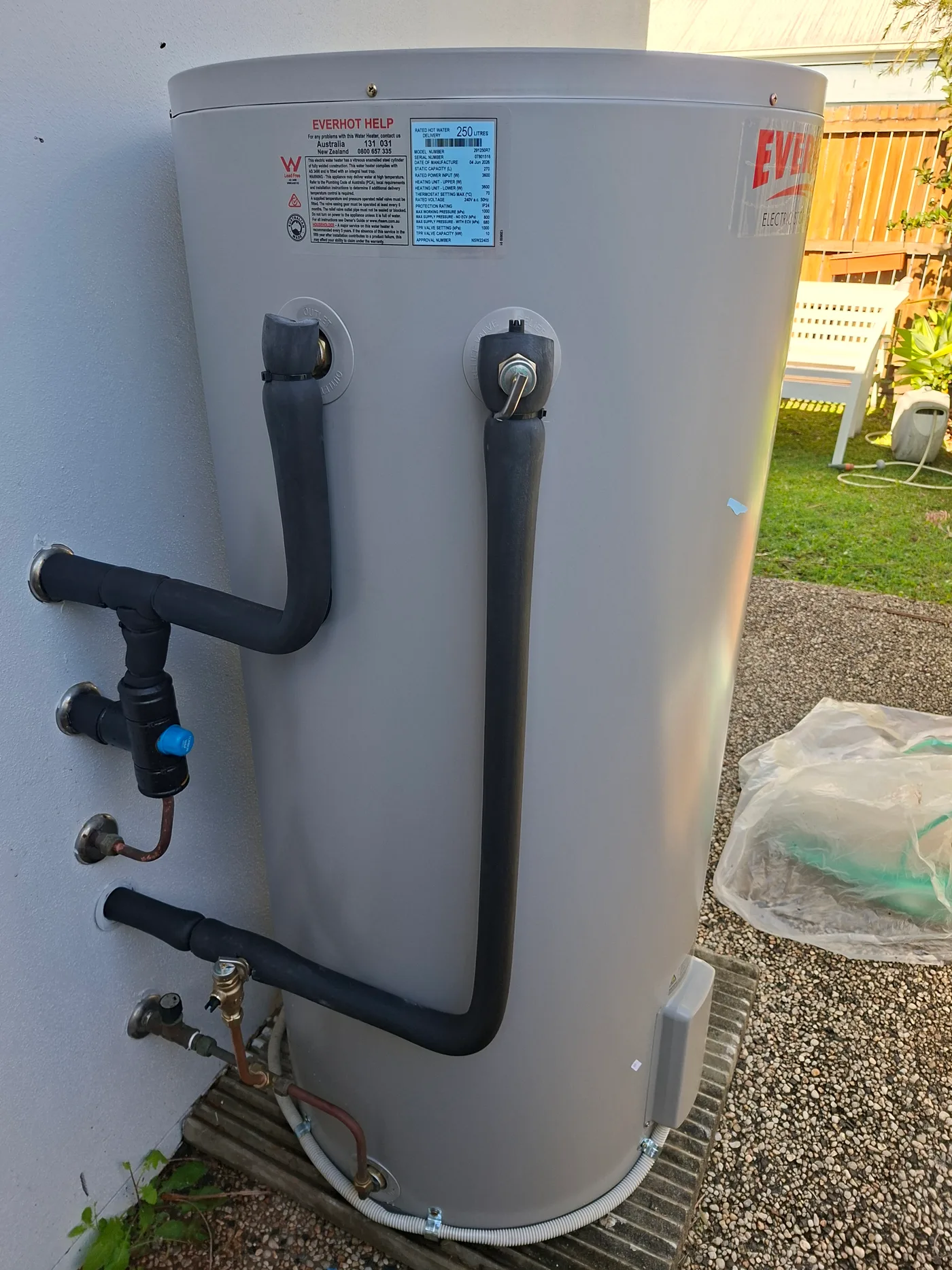
Flood history matters too. Gympie's low-lying areas around Mary Street and the river flats have been inundated repeatedly, most severely in 2022, and any hot water unit that has been submerged needs assessment rather than simply being dried out and switched back on. Insulation stays saturated, gas valves and electrical controls corrode from the inside, and the failure often shows up months later.
RCM Hot Water works around all three. Water source is checked before an anode is specified, replacement hot water systems in flood-affected streets are set on raised bases or relocated where the plumbing allows, and LPG installations are quoted with the bottle arrangement included rather than left as your problem to solve.