
How Cooroy's Water and Terrain Affect Hot Water Systems
Cooroy is a hinterland town in the Noosa Shire, set inland from the coast where the country rises toward Cooroy Mountain and the Mary Valley beyond. Its makeup is genuinely mixed: a compact town centre with older timber housing and a heritage railway precinct, newer residential estates on the fringes, and a wide surrounding belt of small farms, lifestyle blocks and acreage.
That acreage belt is where hot water gets complicated. Properties beyond the reticulated network rely on rainwater tanks, and rainwater is soft with a pH typically below neutral. Soft, slightly acidic water is aggressive toward sacrificial anodes and copper fittings, so anodes are consumed faster than the standard five-year assumption and, once gone, corrosion moves to the cylinder itself. Pump-fed supply adds a second issue: if the pressure pump cuts in and out at the wrong pressures, a continuous flow unit can drop below its minimum activation flow and cycle, producing the intermittent cold bursts owners often blame on the heater.
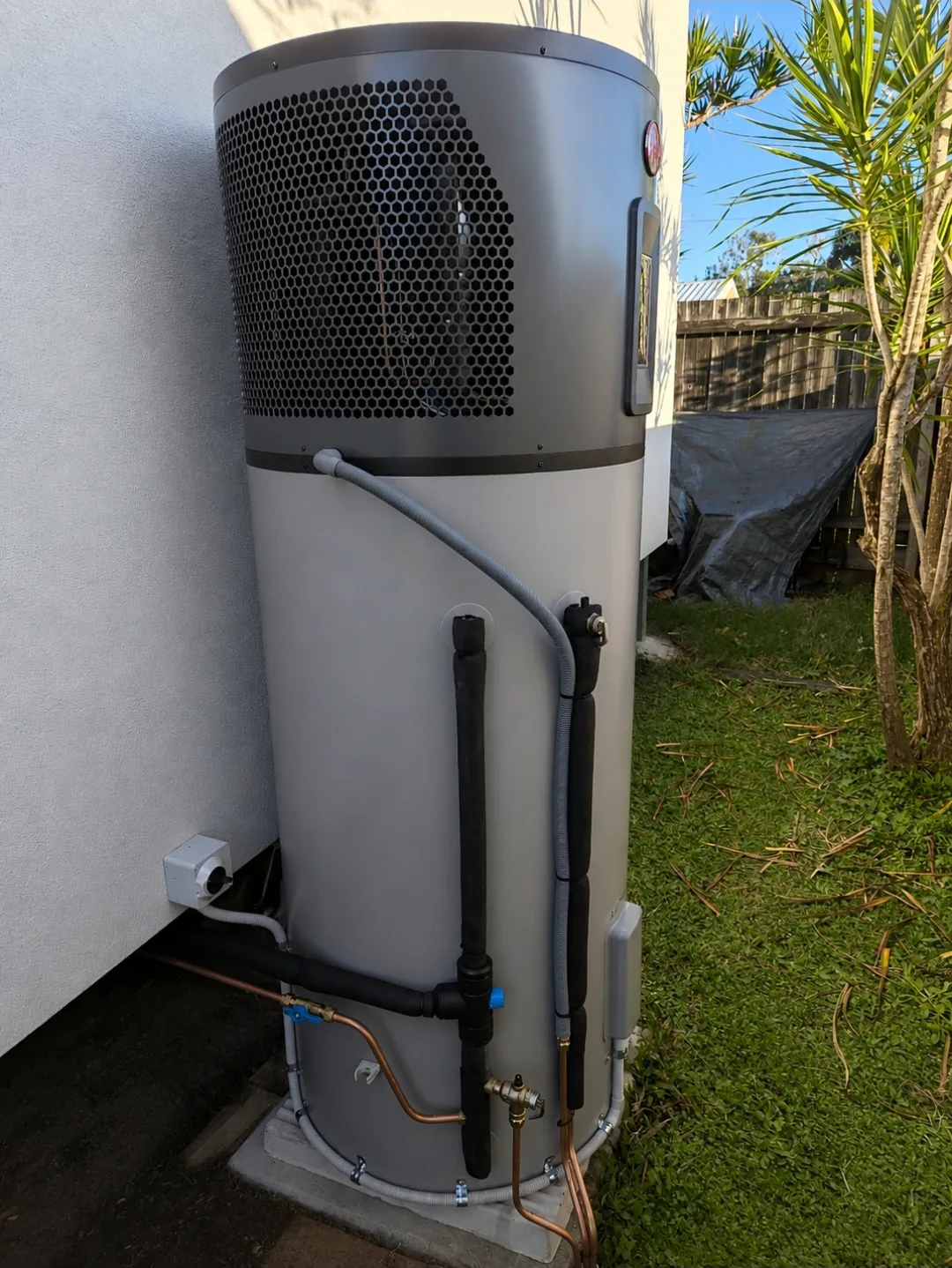
Elevation matters as well. Cooroy sits meaningfully above the coastal strip and records cooler overnight minimums, particularly in the valleys, which lengthens recovery times on storage systems and needs to be accounted for when sizing a heat pump. There is also no reticulated natural gas in the district, so gas hot water here means LPG bottles, with all the placement and clearance requirements that come with them.
RCM Hot Water adapts on each of these points: anode type specified against the actual water source, pump pressure checked before a heater is condemned, heat pumps sized with hinterland minimums in mind, and LPG bottle arrangements included in the quote so that hot water systems in Cooroy are installed for the property they are actually going onto.