

Nambour's Housing Stock and What It Means for Hot Water
Nambour was the Sunshine Coast's administrative and commercial centre long before the coastal strip overtook it, and its building stock reflects that history. The sugar industry shaped the town until the Moreton Mill closed in 2003, and much of the residential fabric (timber houses on stumps, post-war cottages, mid-century brick and a considerable number of converted or purpose-built flats) predates the coastal development boom by decades.
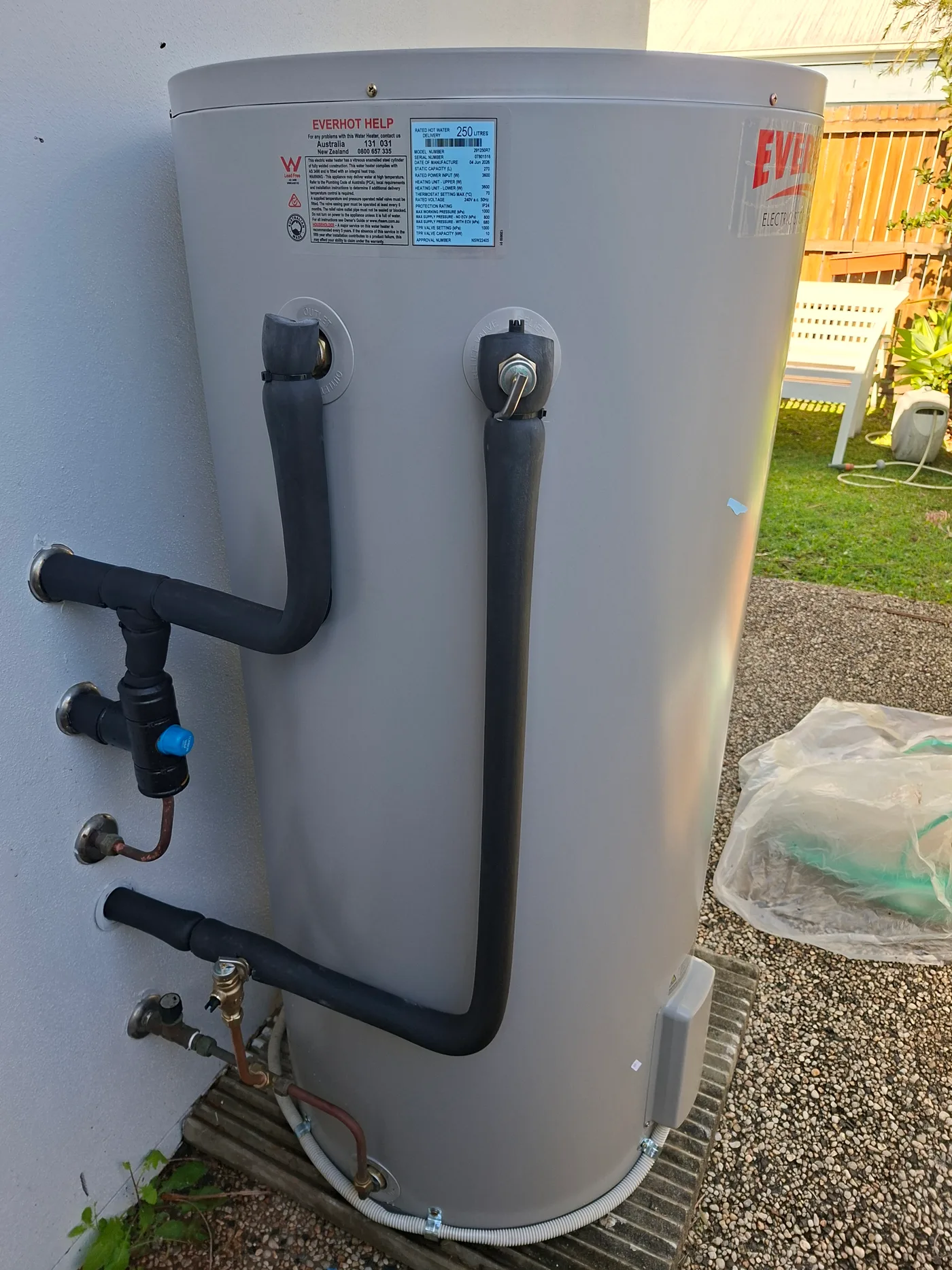
That has three consequences for hot water. First, average system age is high, and many installations are on their original position with pipework and electrical supply that has not been reviewed since. Second, tempering valves are frequently absent on older systems, because the delivery-temperature requirement post-dates the installation; any replacement must include one, which owners often do not expect. Third, the town is built on hills, and the classic Nambour arrangement is a tank tucked under a high-set house or at the low corner of a sloping block, where a slow leak drains away invisibly and the first symptom is a water bill.
Nambour also differs from most of the northern coast in having some reticulated natural gas, which genuinely changes the replacement options. Where mains gas is available at the boundary, continuous flow becomes a strong choice for large or multi-generational households; where it is not, the comparison narrows to electric storage and heat pump.
RCM Hot Water works this out at quoting stage rather than on the day. Supply type is confirmed, access to the existing unit is assessed for safe removal, compliance items like the tempering valve and safe tray drainage are priced in, and the replacement is sized against current occupancy, so hot water systems in Nambour end up matched to the house as it is now, not as it was built.