
Why Mooloolaba Is Hard on Hot Water Systems
Mooloolaba's dwelling stock is unusually tourism-weighted. The Esplanade and the streets behind it are dominated by strata-titled apartment buildings, a high proportion of which operate as short-stay accommodation, alongside permanent residents, retirees and a working harbour precinct at the Mooloolaba Wharf. Three local conditions consistently shape the hot water work here.
The first is the occupancy curve. A short-stay apartment does not use hot water like a household. It sits idle, then draws heavily over a two-hour window, then goes idle again. Storage systems specified on average household assumptions simply cannot recover fast enough, so guests complain, owners blame the brand, and the replacement repeats the error. Continuous flow, or a properly oversized storage unit, is the structural fix.
The second is marine exposure. Mooloolaba faces open ocean, and buildings on and near the Esplanade take constant salt-laden onshore wind. It attacks casings, brackets, exposed copper and gas burner assemblies well before the cylinder itself fails, which is why owners are often surprised to be quoted a replacement on a unit whose tank warranty is still current.
The third is access and governance. Plant is often on common property, lifts and stairwells constrain what can physically be carried in, and body corporate by-laws frequently restrict external unit placement, visible flues and compressor noise, which can rule out a heat pump on a balcony regardless of its efficiency.
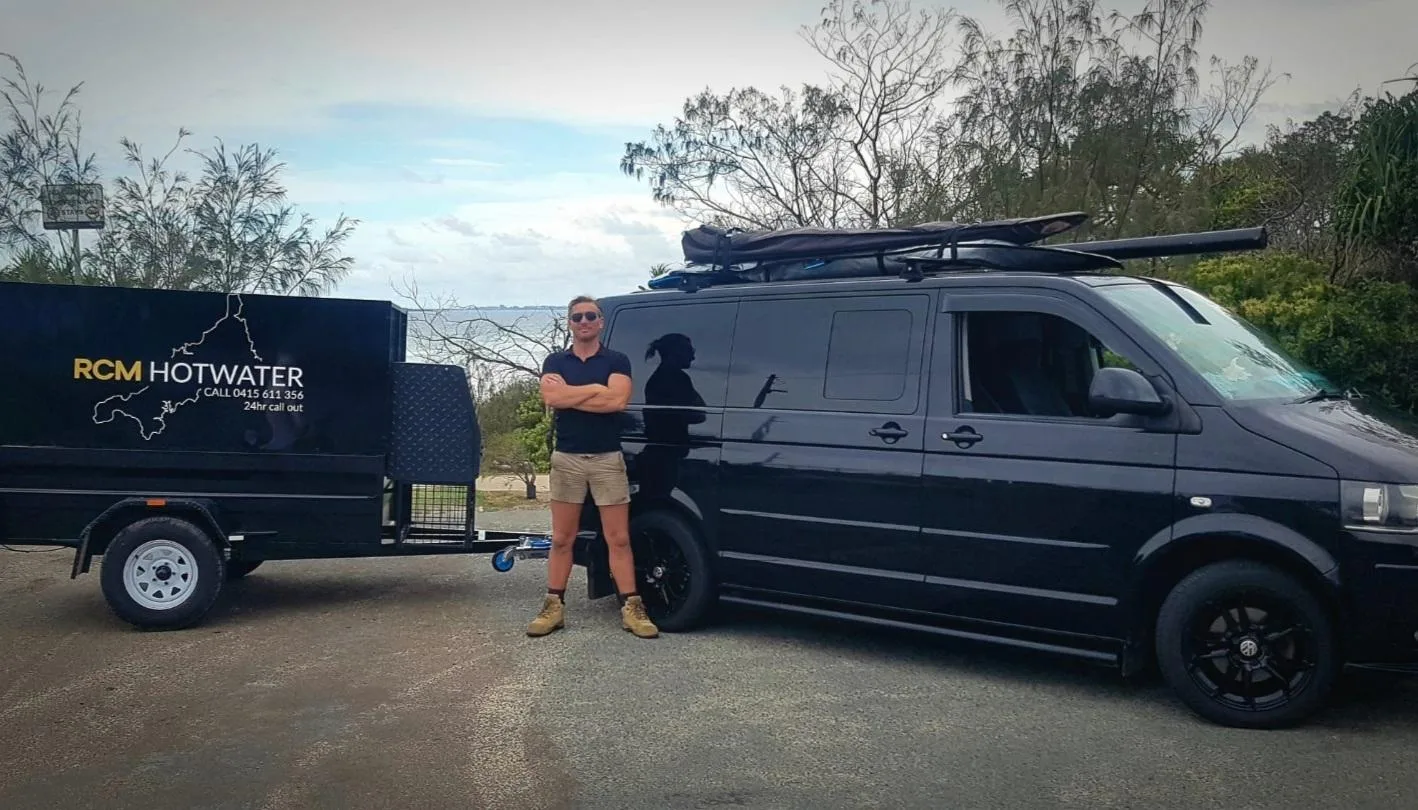
RCM Hot Water works to those constraints deliberately: sizing against maximum guest numbers, recommending shorter service intervals for salt-exposed positions, and confirming access dimensions and by-law limits before a unit is ordered, so hot water systems in Mooloolaba are installed once and stay in service through peak season.