
What Island Living Does to Hot Water Systems on Bribie
Bribie Island is a sand island separated from the mainland by Pumicestone Passage, connected by a single bridge since 1963 and administered within the Moreton Bay Regional Council. Its residential areas (Bongaree, Bellara, Woorim and the newer canal estates at Banksia Beach) sit within a few hundred metres of salt water in almost every direction, and the island records one of the highest proportions of residents aged 65 and over in Queensland.
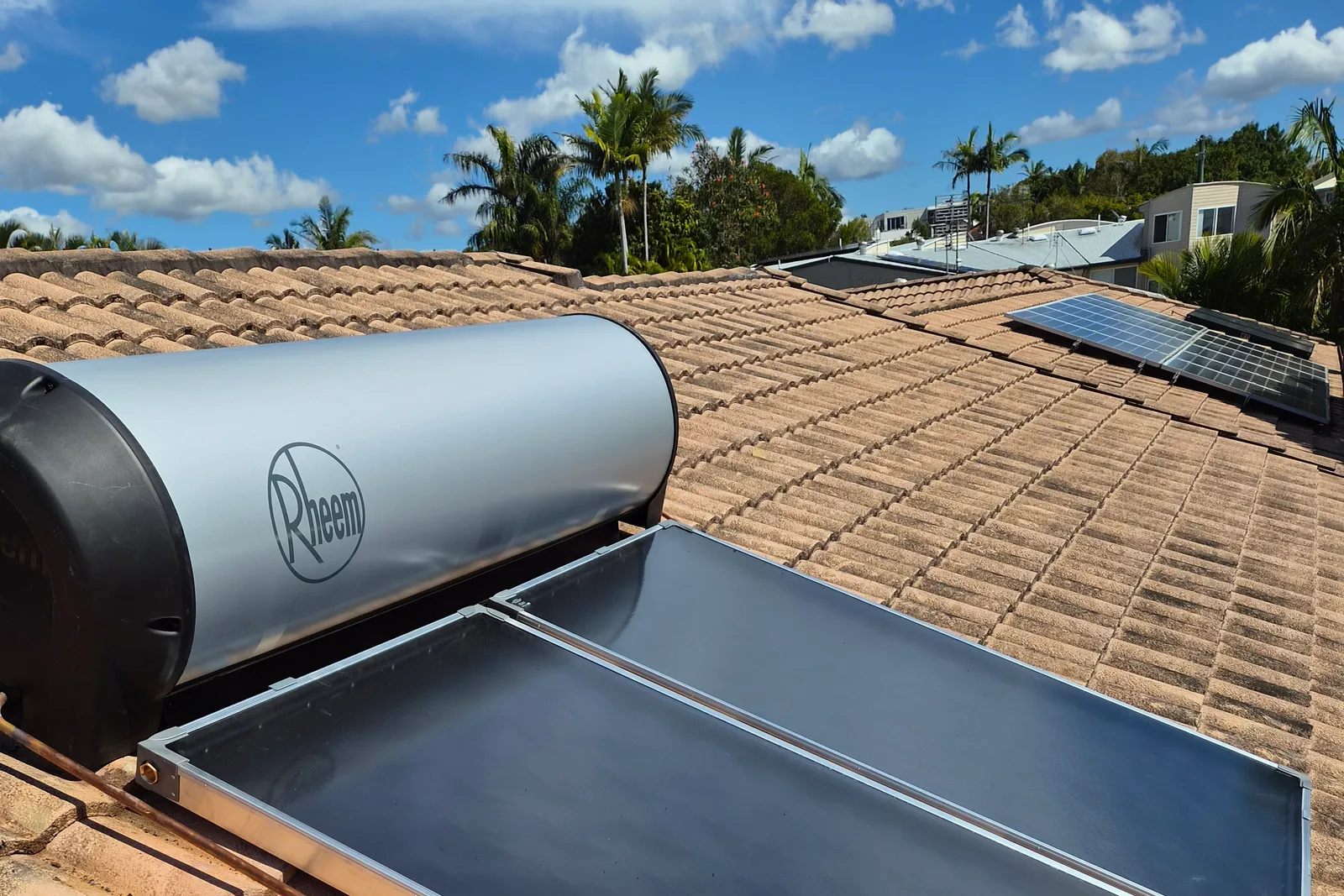
Marine exposure is the dominant technical factor, and it is worse here than in a mainland coastal suburb because there is no inland side. Salt-laden air corrodes mounting brackets, casing fasteners, exposed copper tails, relief valves and gas burner assemblies. The consequence owners find frustrating is that a system can be effectively finished while its cylinder warranty is still current: the tank is fine, everything holding it up and connected to it is not. Systems in exposed positions at Woorim, facing the open ocean, weather fastest.
Demographics change what matters second. In households with older residents, a tempering valve that has drifted out of calibration is a genuine scald risk, and a system that fails without warning is a welfare issue rather than an inconvenience. Reliability and safety checks carry more weight here than efficiency arguments.
The third factor is logistics. There is no reticulated natural gas on the island, so gas means bottles, and single-bridge access makes return visits costly in time. RCM Hot Water responds by assessing the whole installation for corrosion, verifying delivery temperature at every service, and carrying common components so hot water systems on Bribie Island are repaired on the first attendance wherever possible.